The Need
Innovating the everyday work of ministry.
Every initiative here has to meet a real need, and some of those needs we feel before we can name them. The oldest version of the problem is in Acts, where the early church hit the same strain we do: the work of keeping a church running pulling against the work a church exists for.
It would not be right for us to neglect the ministry of the word of God in order to wait
on tables. Choose seven men from among you who are known to be full of the Spirit and
wisdom. We will turn this responsibility over to them and will give our attention to prayer
and the ministry of the word. … So the word of God spread. The number of disciples in
Jerusalem increased rapidly.
Acts 6:2–4, 7
The apostles would not leave prayer and the word to wait on tables, but they did not dismiss the tables either. They set apart seven men full of the Spirit and wisdom for that work, and as the seven served, the word of God spread all the more (Acts 6:2-4, 7). Even waiting tables called for the Spirit. The same honor appears earlier: the first craftsman Scripture describes as filled with the Spirit of God is Bezalel, given the skill to build the things Israel worshiped with (Exodus 31:3). Skill for practical work is a gift from God like any other, one we can hand back to Him rather than keep as our own.
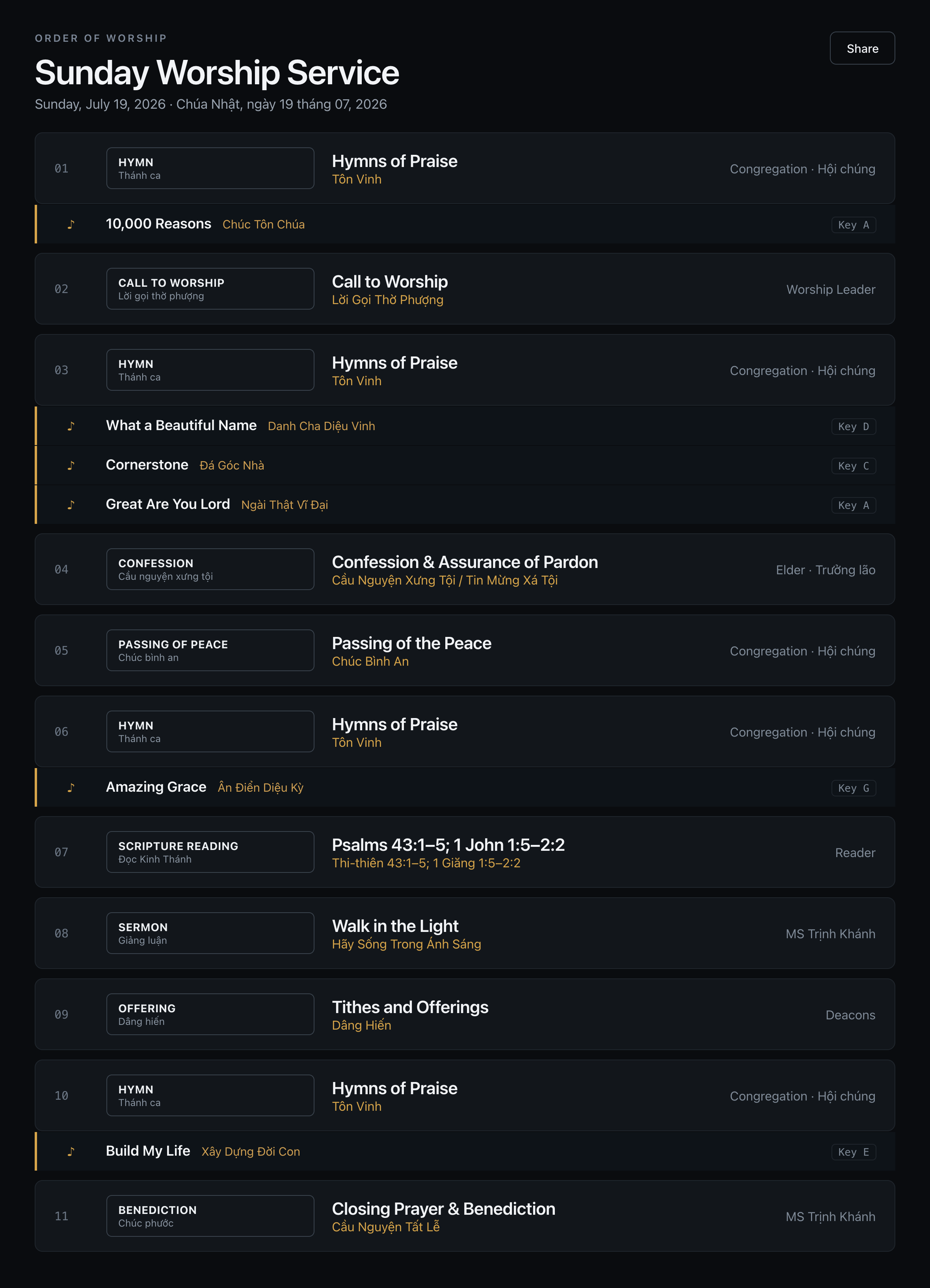
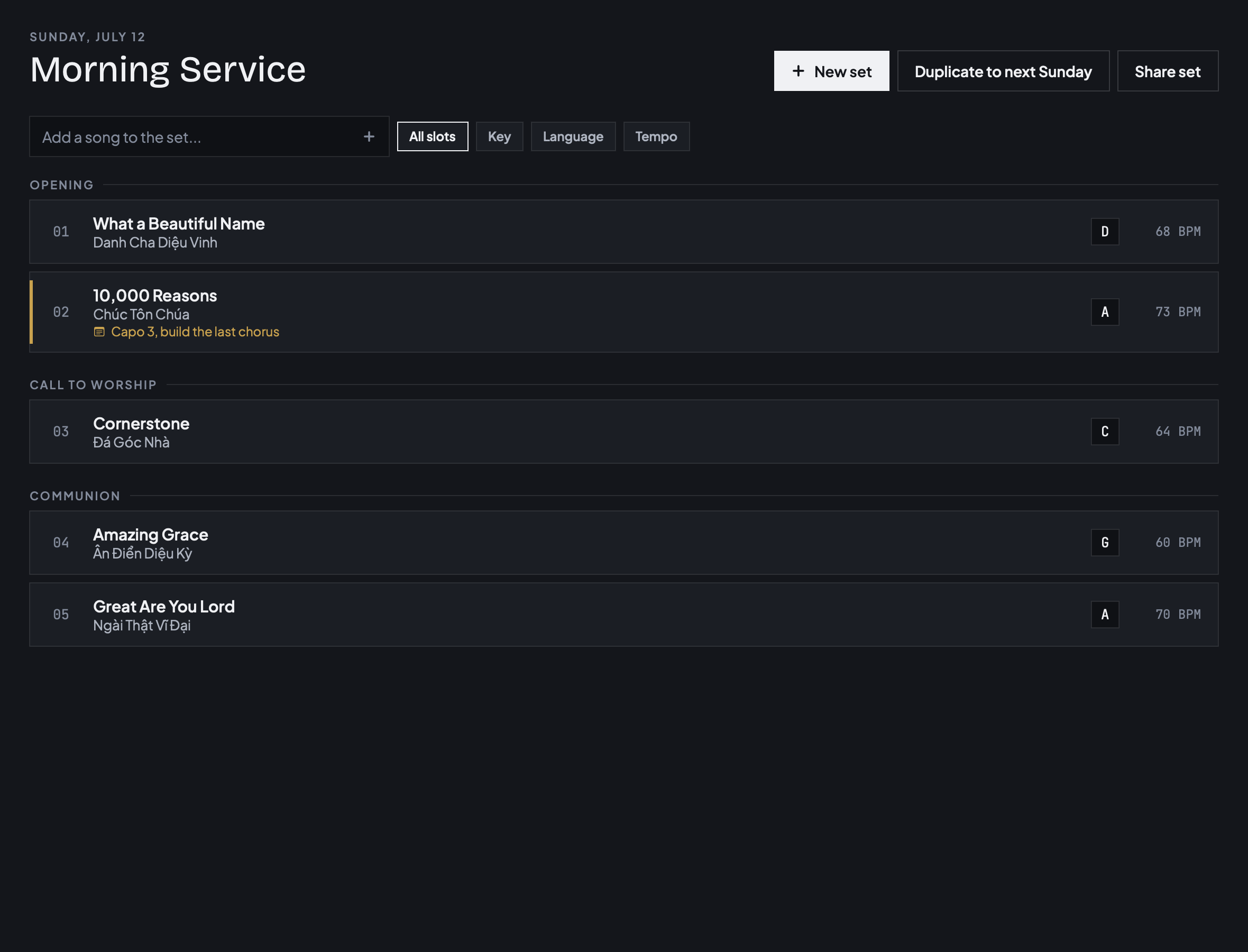
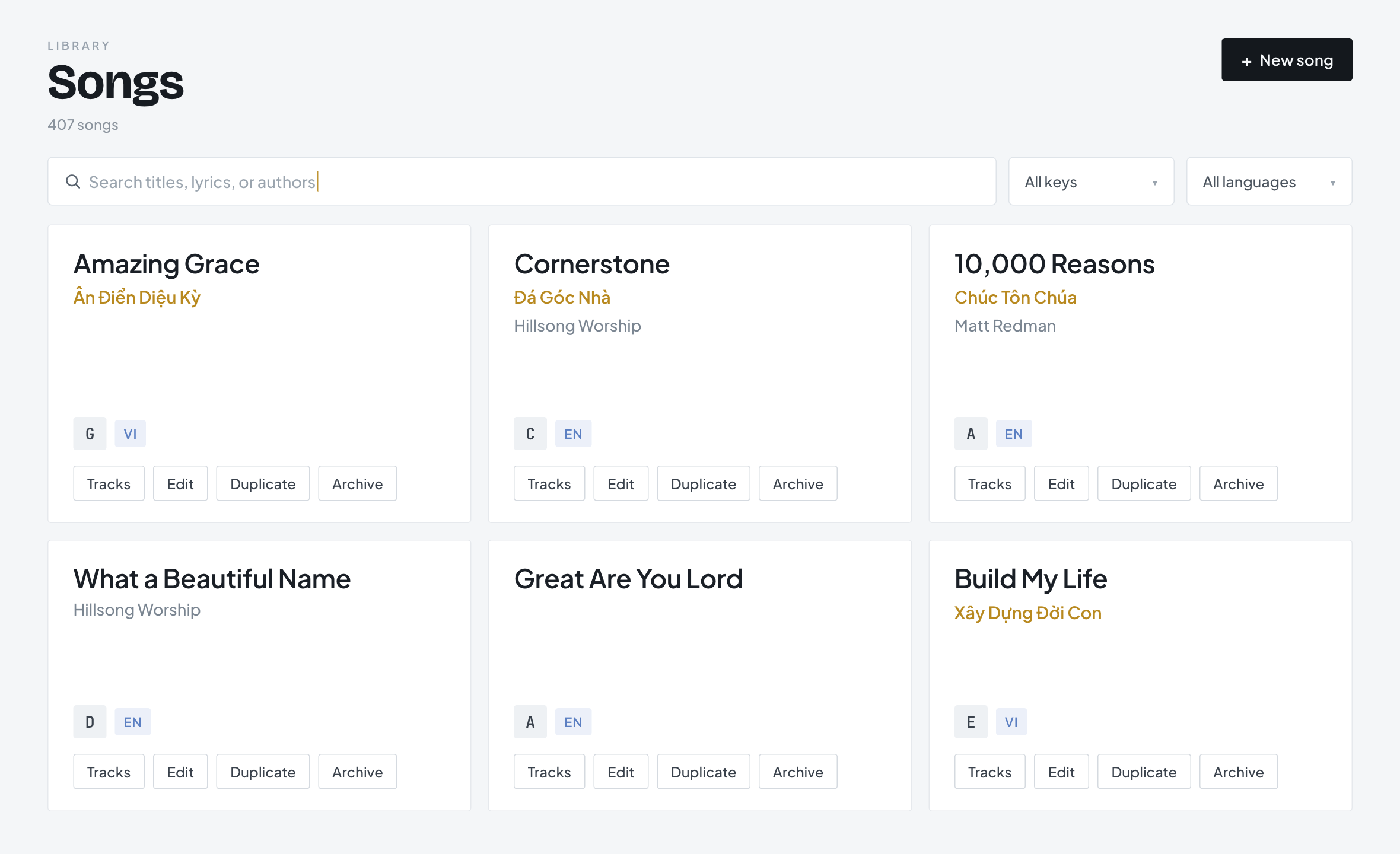
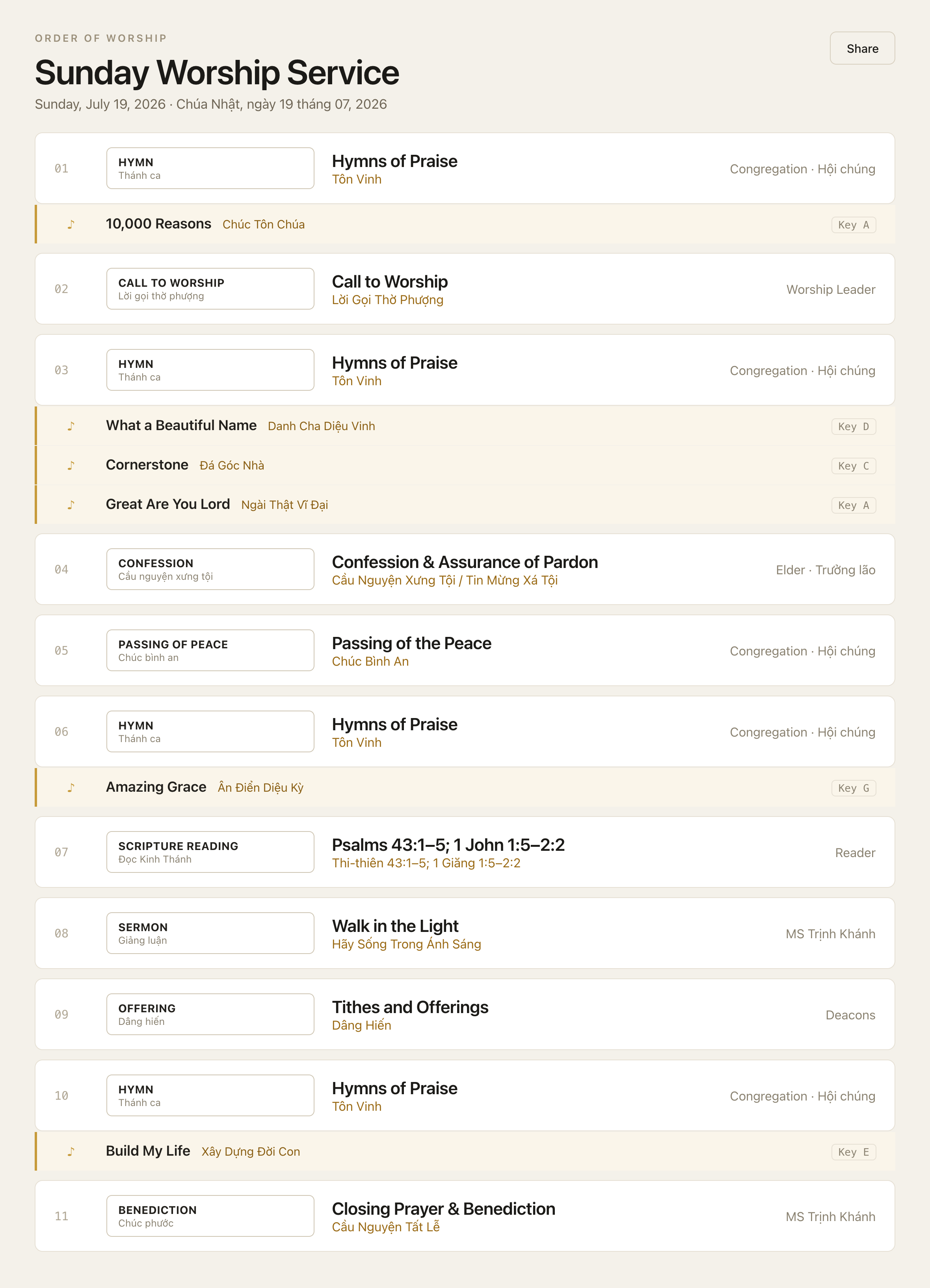
Our team is no different. Some of us teach, some make the slides, some lead the singing, some run the sound. Building and running these tools is that same kind of work: practical, often unseen, and done for God all the same.
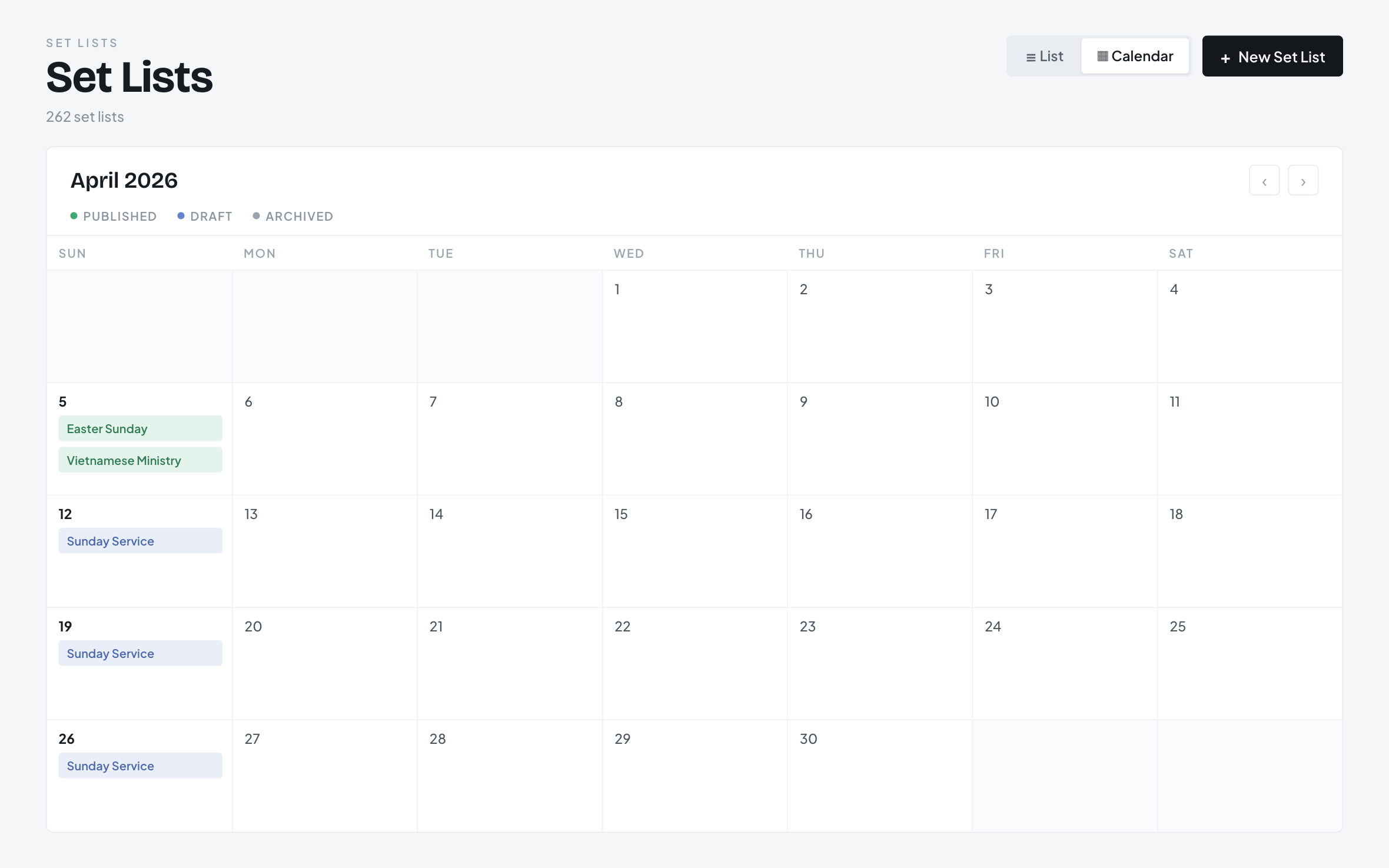
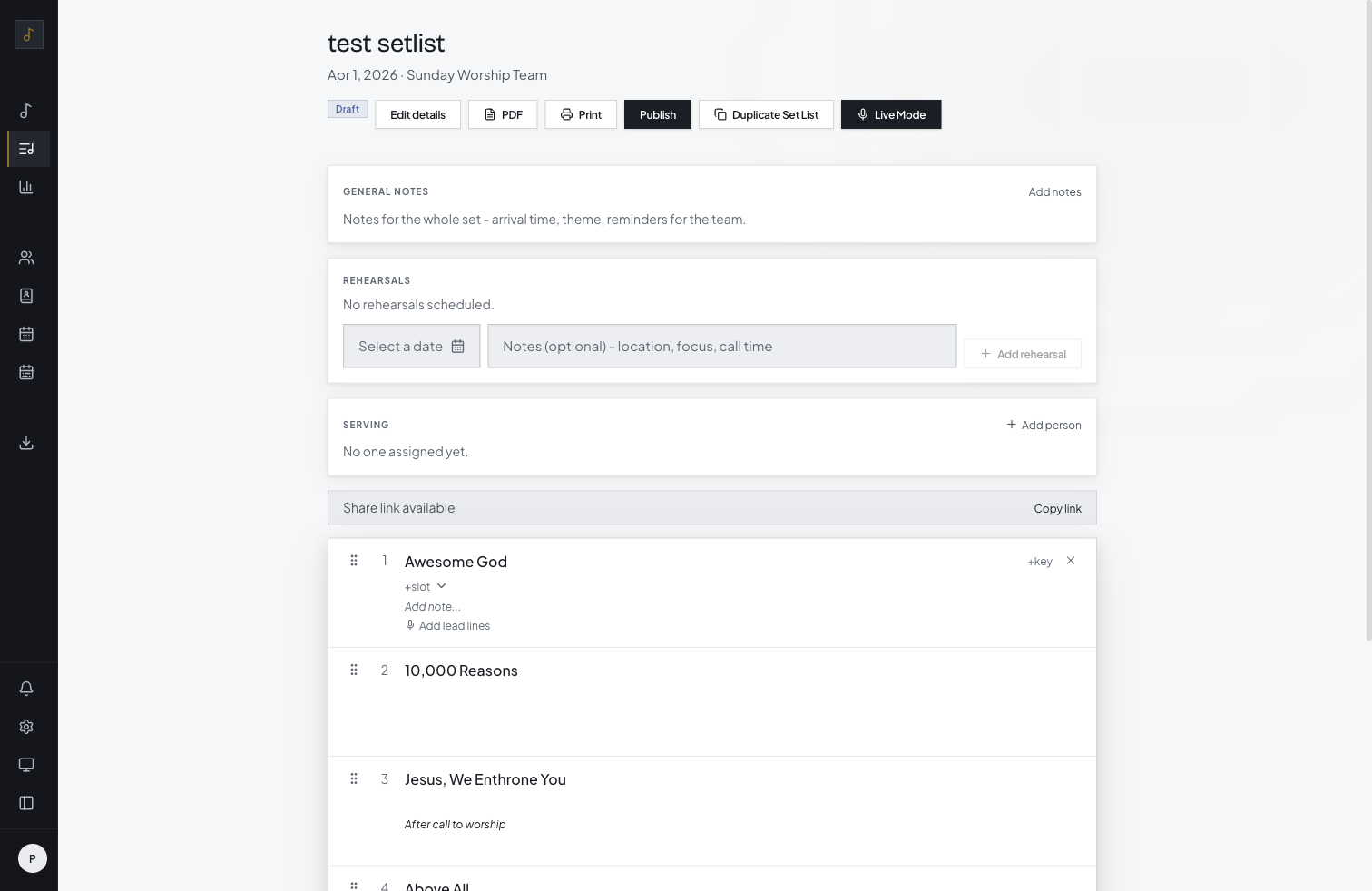
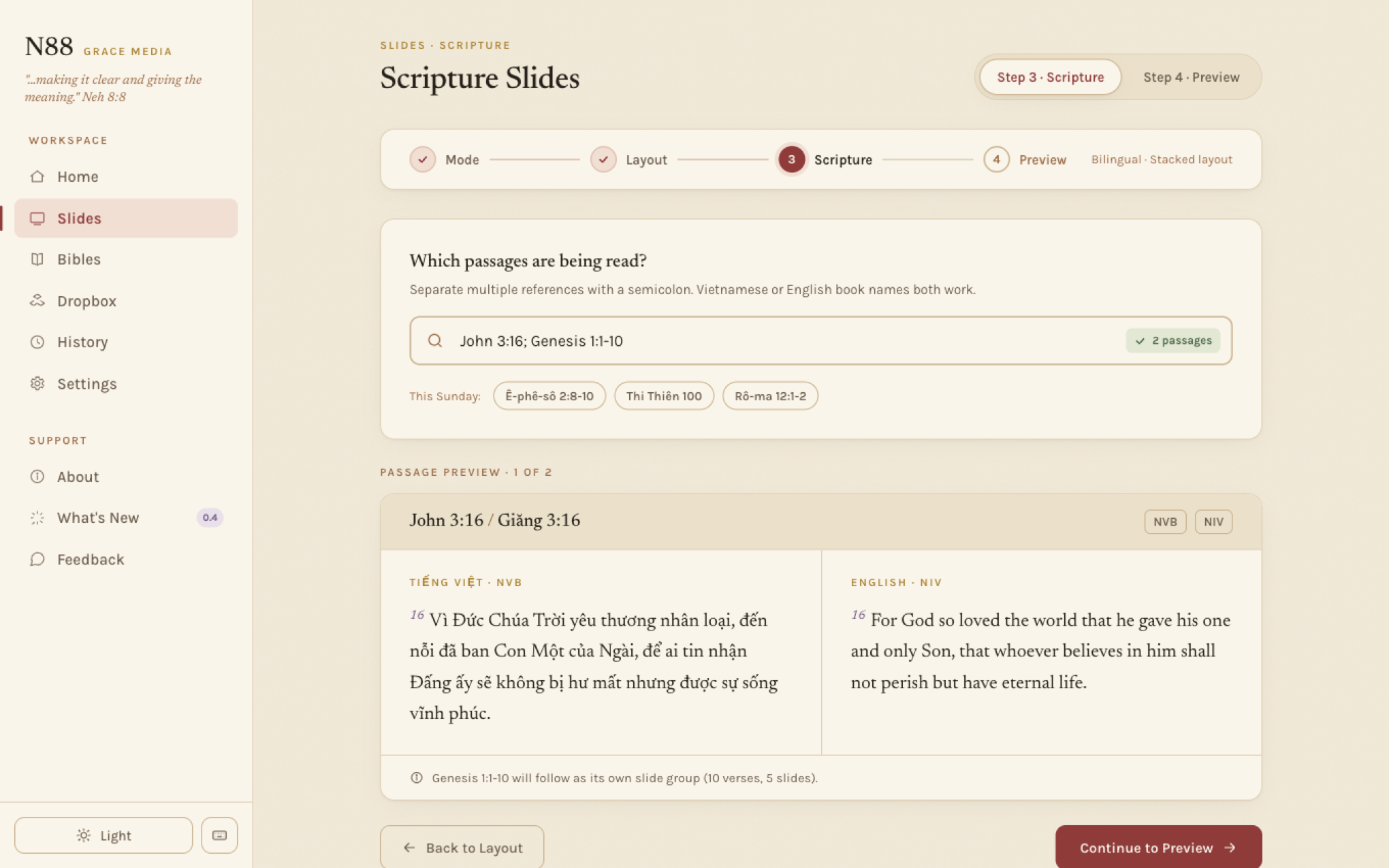
Much of our ministry still runs by hand, rebuilt from scratch each week. That holds up for a Sunday, often well. But the recurring work falls on a few people: slides, set lists, recordings, announcements, week after week. Piled on duties that return every seven days, it wears them down and, in time, burns them out. It also crowds out what matters most: teaching, shepherding, welcoming someone new.
We hold it all loosely, because it is God's work before it is ours. Unless the Lord builds the house, its builders labor in vain (Psalm 127:1), so we pray, as Moses did, that God would establish the work of our hands (Psalm 90:17). And because the work is His, the way we have always done it is not sacred. When an old pattern could no longer carry the mission, the early church changed it, as we saw in the Acts passage above, and the gospel reached further. Changing how we work is not novelty. It is ordinary faithfulness: keep what still serves, repair what does not, so neither the ministry nor its people are worn down by habits no one has stopped to question.
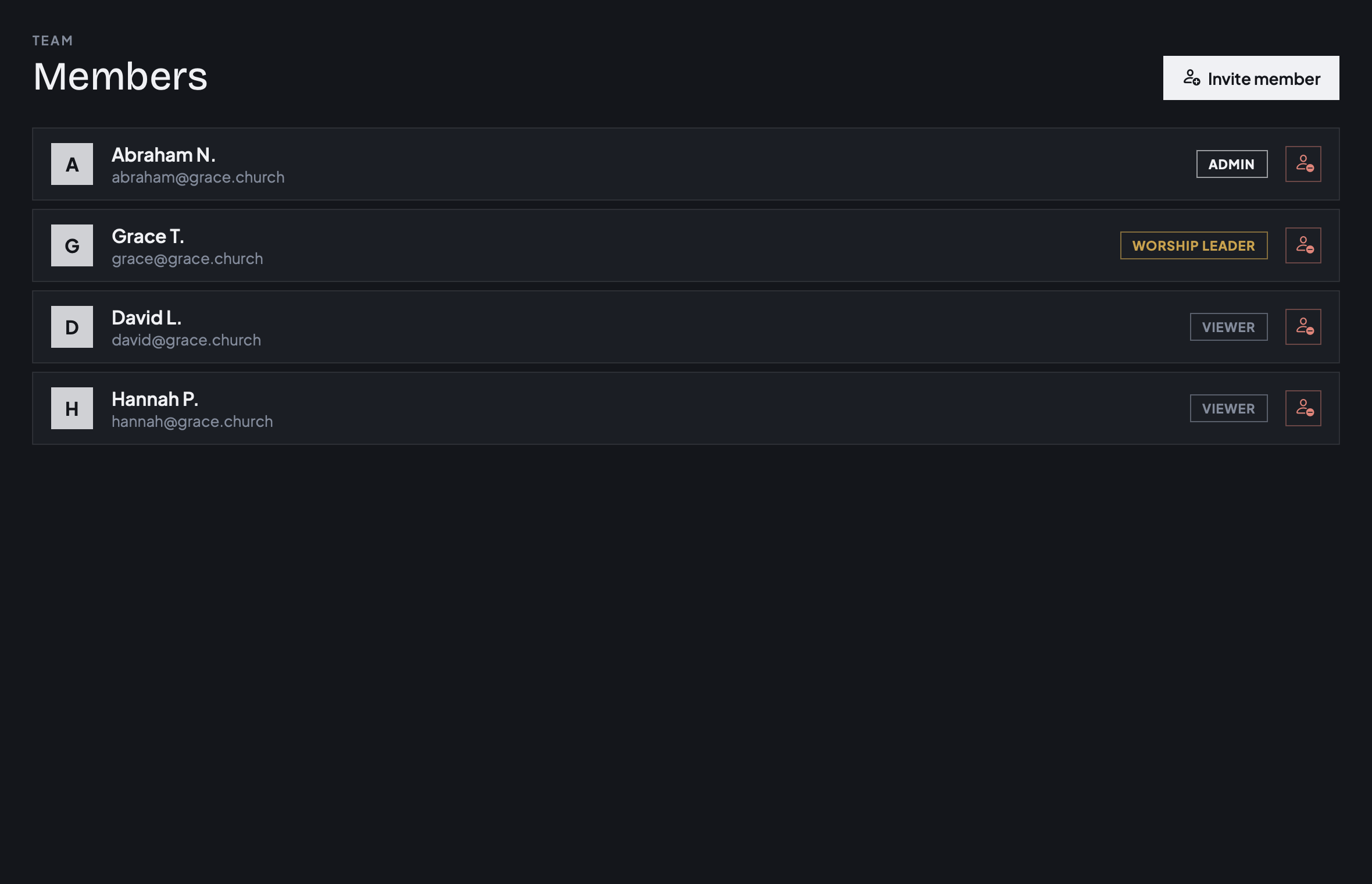
We are not the first to feel this, and others have already built for it. Most churches now plan on a shared platform like Planning Center, which serves more than 90,000 churches. At our church, more than ten ministries need some kind of rostering, and a few still do it manually, on paper.
Lifeway Research found that 84 percent of churches encourage every member to serve, while only about 30 percent served in the past year. Aaron Wilson, writing up that research, adds a finding from his own church’s survey: the people who serve are the ones who feel they belong. More than attendance, more than small groups. Serving is what makes someone part of the church rather than a visitor to it. So the 70 percent who never sign up are the ones missing out.
Good tools cannot make anyone volunteer. What they can do is answer the questions a willing person runs into first: what is needed, on which Sunday, and exactly what is expected of them if they say yes. Today one person holds those answers in their head, and they arrive as a text the week before. Written down, the ask becomes one date and one clear job. That is far easier to accept, and far easier to keep doing. Then the work becomes what it should be, service to the body and to God, with our eyes on Christ.







 20:55–21:29